



It Takes All of Us: A First Look at SVS’ 2026 Keynote Speaker
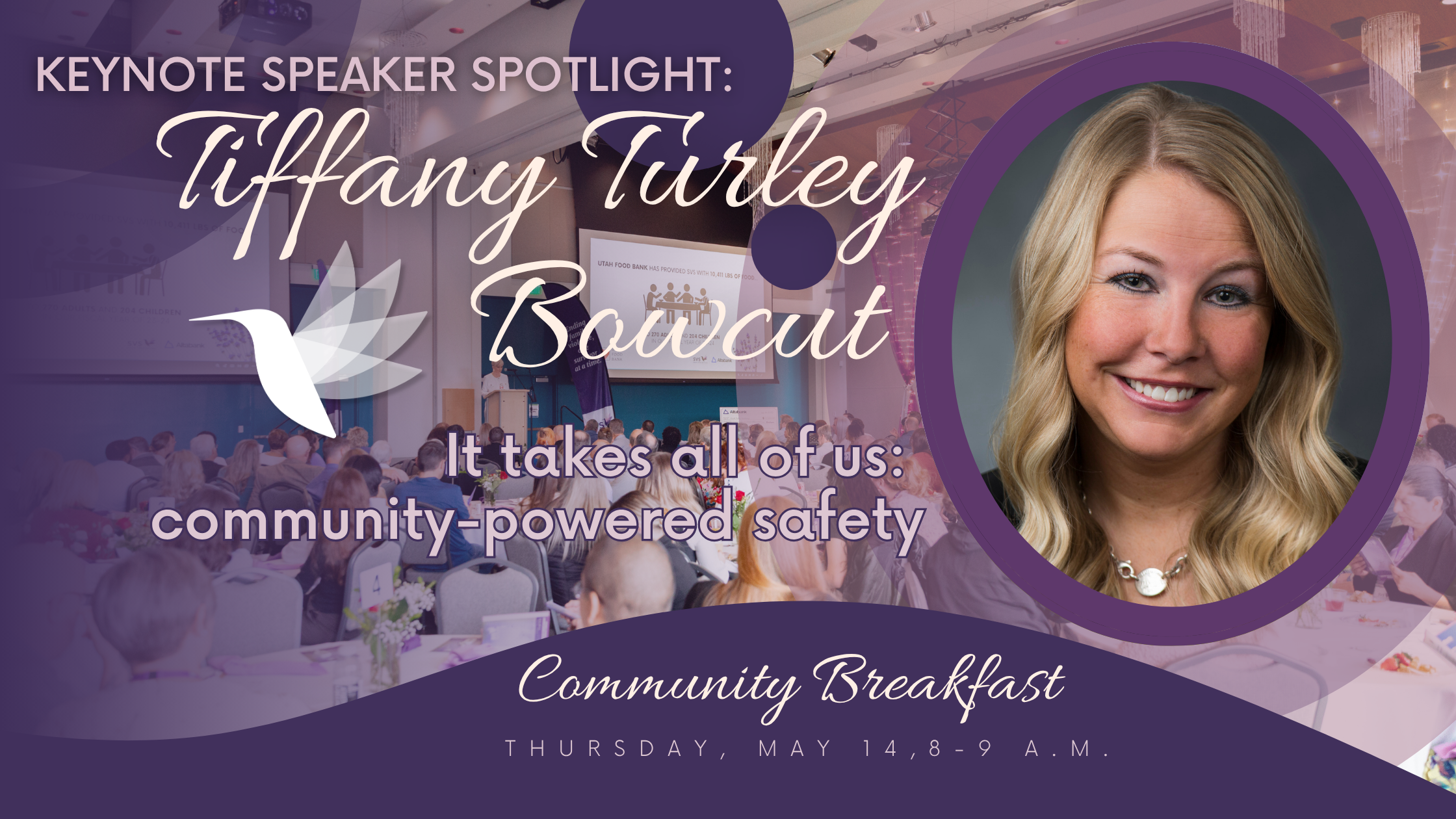
When we talk about supporting survivors of sexual assault and domestic violence, it’s easy to assume the work belongs only to professionals: advocates, counselors, police officers, or nonprofit organizations. But as Tiffany Turley Bowcut reminds us, real change happens when entire communities engage in shared responsibility.
From beginnings to advocacy
Tiffany grew up in Salt Lake City in what she describes as a “traditional and sheltered” upbringing. Her family life was stable, predictable, and loving, an experience she now recognizes as a privilege.
It wasn’t until after college, while working for the Department of Workforce Services, that her understanding of community needs began to shift. There, she worked closely with single mothers, families, and children navigating financial insecurity, child support systems, public assistance, and food access.
“That’s when my eyes really started to open,” Tiffany shared. “Not just the difference that can be made—but the difference that needs to be made.
Over time, her professional experiences intersected with deeply personal ones. Tiffany herself is a survivor. Navigating those systems not as an advocate, but as someone in need, gave her a fuller understanding of just how complex, intimidating, and often retraumatizing they can be.
Combined with her professional background and her desire to create a safer world for her children, these experiences shaped a calling that continues to guide her work today.
Faith as a source of healing and responsibility
Faith plays a central role in Tiffany’s life and leadership. She is open about the fact that while therapy, medication, and professional support were essential in her healing journey, her faith was what ultimately helped her emerge from some of her darkest moments.
“My faith reminded me of my worth and that I’m still loved. That mattered more than I can explain,” Tiffanny said.
At the same time, Tiffany is clear-eyed about the challenges that come with faith-based communities, particularly when uncomfortable topics like sexual violence are avoided or minimized. In Utah, where faith is a defining force in many people’s lives, she believes separating faith from conversations about abuse can hinder healing and progress.
“When faith teaches inherent dignity, compassion, accountability, and protection of the vulnerable,” she said, “supporting survivors actually aligns with religious values, it doesn’t oppose them.”
She emphasizes the importance of trauma-informed training for religious leaders, open dialogue that includes diverse experiences, and helping congregations understand that confronting harm strengthens, not weakens, community.
A leader who sees the whole picture
What makes Tiffany’s voice so compelling is the breadth of her experience. She has worked in government, higher education, community advocacy, and she has lived through the realities survivors face. She described this as a “full spectrum view,” one that helps her understand how policy, culture, and personal experience collide to shape a survivor’s path to safety and healing.
During her time overseeing sexual assault, domestic violence, and stalking response at Brigham Young University, she learned something essential: policy alone isn’t enough. “We can check the box and have a policy,” she said, “but if the culture doesn’t really support reporting… then the policy does us no good.”
Why “It Takes All of Us” isn’t just a theme — It’s a truth
Tiffany believes deeply that supporting survivors is not the job of one organization, one department, or one leader. It is the responsibility of all of us — neighbors, businesses, faith communities, educators, and friends.
She sees firsthand how safety at home ripples outward into healthier workplaces, stronger families, and more resilient communities. “When communities invest in supporting survivors,” she told us, “They create safer, stronger, and more resilient environments for everyone.”
Her perspective is a powerful reminder that domestic violence and sexual assault are not private issues, they are community issues. And community issues require community solutions.
That’s why Tiffany is the best Keynote Speaker to embody our theme this year, Community Powered Safety: It Takes All of Us.
Tiffany embodies that truth. She lives it. And she challenges all of us to live it too.
What to say and not say when someone discloses
For many people, the idea of supporting a survivor can feel overwhelming. Tiffany emphasizes that you don’t need training or perfect language, just compassion.
“What people need most is for you to believe,” she said. “You’re not a detective. You’re not a jury. The only thing you need to do is believe.”
She encourages avoiding questions that may place blame, such as asking about clothing, alcohol, or behavior. Instead, she recommends simple, grounding responses like:
- Thank you for trusting me.
- I’m really sorry this happened.
- I believe you.
- I’m here for you.
Survivors have had their power taken away. Supporting survivors means giving them control back. They’ll decide what comes next, at their own pace.
Why supporting survivors strengthens everyone
Employers investing in services for survivors isn’t just the right thing to do; it’s a practical one.
“When people are safe at home, communities are safer,” Tiffany explained. Access to safety, healing, and long-term support leads to healthier families, stronger workplaces, and more stable communities overall.
She also points out that survivor support is economically smart. When individuals are protected and supported early, communities reduce long-term costs tied to healthcare, lost productivity, and crisis intervention.
A voice of hope in heavy places
Despite the weight of the issues she works with, Tiffany is hopeful. She sees resilience in survivors, growing awareness in communities and leaders, and a willingness to bring light into dark places. She shared a line that has stayed with us: “Do we avoid dark places out of fear, or do we bring light to them?”
Tiffany chooses to bring light. And on May 14th, she’ll help all of us do the same.
Join us and hear from our Keynote speaker
This year’s breakfast is a chance to gather as a community, learn from a leader whose story will move you, and recommit to the truth that it takes all of us to support survivors of domestic violence and sexual assault.
If you’ve ever wondered, “How can I make a difference?” This is where you start.
Join us. Bring a friend. Bring your workplace. Bring your voice. And most importantly, come and listen to Tiffany Turley Bowcut speak.