




Media helps shape our understanding of domestic violence

Every October, Domestic Violence Awareness Month invites us to look beyond the statistics and recognize the experiences of survivors, the realities of abuse, and the role each of us plays in building safer communities.
But awareness is not shaped by conversations alone. It is also shaped by what we see in advertisements, television shows, movies, news stories, and social media feeds.
The media influences how we understand relationships, interpret behavior, and decide what is acceptable. The way domestic violence is portrayed can challenge harmful beliefs and encourage accountability — or reinforce stereotypes that make abuse harder to recognize.
As we observe Domestic Violence Awareness Month, it is worth asking an important question:
What messages about violence are we seeing, and what responsibility do we have to challenge them?
When violence becomes entertainment
In August 2026, a controversial advertisement featuring golf content creator Good Good Golf and golf equipment brand Callaway sparked public criticism. The video depicted a man shoving a woman to the ground after she reached for his golf club. The video has since been removed from official channels, and Good Good Golf apologized for publishing the commercial.
The controversy demonstrated how an attempt at humor or entertainment can spark a public conversation when violence against women becomes the punchline. Public criticism emphasized that depicting aggression as funny, justified, or inconsequential can lead audiences to underestimate the seriousness of such behavior.
This does not mean that every fictional depiction of violence causes someone to become abusive. Rather, it asks us to consider the cultural messages that accumulate when aggression, dominance, and humiliation are repeatedly presented as entertaining or acceptable.
Advertising can associate masculinity with aggression, physical dominance, and the need to prove oneself.
These messages can narrow expectations for how men behave and respond to conflict. When violence becomes a punchline, the person harmed can become secondary to the joke. The audience may focus on the exaggerated reaction rather than the behavior itself.
During Domestic Violence Awareness Month, these portrayals offer an opportunity to ask whether the media we consume challenges the normalization of violence or helps reinforce it.
The difference between reporting on violence and understanding it
News coverage also shapes public understanding of domestic violence. Reporting can bring attention to abuse, hold perpetrators accountable, and connect survivors with resources. However, the way a story is framed matters.
A study discussed by The Guardian found that media coverage of violence against women often sensationalized extreme incidents while giving less attention to the broader social context. Some reporting focused on the details of a violent act rather than the history of abuse, while other coverage shifted responsibility toward survivors or reinforced stereotypes about who experiences violence. Sensational headlines may attract attention, but attention alone does not guarantee understanding.
When domestic violence is presented only through graphic injuries, dramatic incidents, or homicide cases, audiences may develop a limited picture of what abuse looks like.
Domestic violence and abuse are not always visible. It can include coercive control, emotional abuse, financial manipulation, isolation, threats, and sexual violence. These behaviors can occur without physical injuries, yet they can significantly affect a survivor’s safety, independence, and well-being.
Ethical reporting recognizes domestic violence as a pattern of behavior and a matter of accountability, not simply a private conflict or an isolated argument. It avoids language that excuses an abuser’s choices, blames survivors for their circumstances, or implies that someone must experience visible physical harm for their situation to be taken seriously.
Most importantly, responsible reporting preserves survivors’ dignity and privacy. Their experiences should never be reduced to shocking headlines or used as entertainment.
Survivors deserve to have their voices heard on their own terms, with informed consent and respect for their safety.
Media can reinforce harmful norms or help change them.
Although the media can reinforce harmful attitudes, it can also help change them.
Media can influence not only individual attitudes but also perceptions of what a community believes and accepts. People’s understanding of acceptable behavior is influenced partly by what they believe others tolerate.
When a community consistently speaks out against abuse, challenges victim-blaming, and supports survivors, it helps establish a clear expectation that violence is unacceptable.
Awareness campaigns, trauma-informed education, community partnerships, and resource-sharing can help people recognize warning signs and learn how to seek support or help support loved ones. While a single post cannot end domestic violence, thoughtful and accurate communication can help foster a culture that recognizes the seriousness of abuse.
Bring this conversation to your workplace, school, or community group. Request a domestic violence awareness presentation from SVS.
The United Nations Entity for Gender Equality and the Empowerment of Women (UN Women) recommends that media address violence against women through a human rights and gender equality lens, use survivor-centered and ethical reporting practices, challenge harmful stereotypes, and help audiences critically evaluate the content they encounter.
These principles go beyond newsrooms. Advertisers, entertainment creators, influencers, organizations, and everyday social media users all contribute to the messages circulating in our communities.
What Can We Do Differently?
As consumers, we can question jokes that make violence seem harmless, recognize victim-blaming language, and consider whose perspectives may be missing from the story. We can choose not to share content that humiliates survivors or turns abuse into entertainment. When harmful portrayals emerge, we can explain why they matter and ask creators and brands to take responsibility for the messages they distribute.
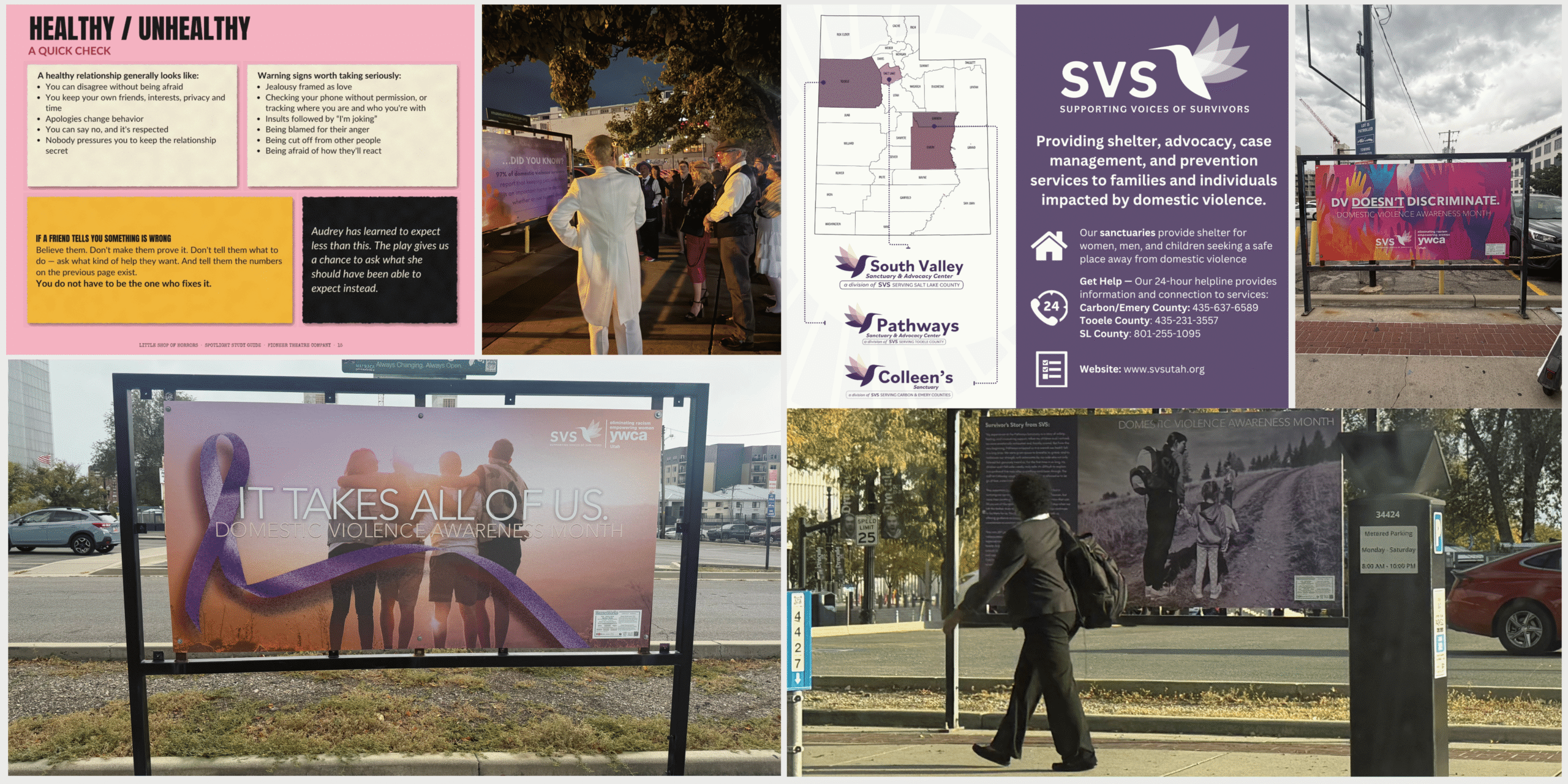
We’ve put these principles into practice through community partnerships that bring survivor-centered awareness into public spaces. In collaboration with YWCA Utah and Craft Lake City, we installed a 14-panel art installation featuring survivor stories and messages reminding our community that it takes all of us, and DV doesn’t discriminate. We also partnered with Pioneer Theatre Company to present Little Shop of Horrors, including promoting SVS resources in the show’s program and event spaces, along with a domestic violence-informed study guide that SVS helped Pioneer Theatre prepare for the cast. These efforts create opportunities to engage new audiences, challenge misconceptions, connect people with resources, and reinforce a shared responsibility to prevent abuse.
As community members, we can challenge harmful assumptions when we hear them. We can learn to recognize abuse beyond physical violence, support people who disclose their experiences, and share accurate information about available resources. We can also encourage media outlets to include expert perspectives, meaningful context, and information about where those experiencing domestic violence and abuse can find help.
Knowing how to respond can help someone feel heard and supported. Learn how to help a friend or family member experiencing abuse.
Awareness campaigns should communicate the seriousness of domestic violence without exploiting trauma. Images and language should reflect the complexity of abuse while affirming the dignity of the people affected by it.
These choices may seem small, but they help establish the standards by which we judge behavior and treat one another.
How does awareness lead to accountability?
Domestic Violence Awareness Month is more than wearing purple, sharing statistics, or recognizing that abuse exists. It is about examining beliefs, behaviors, and social expectations that allow violence to continue and how to change them.
Media is one part of that larger picture. It cannot single-handedly explain or prevent domestic violence; it can influence whether harmful behavior is dismissed, whether survivors are believed, and whether communities understand abuse as a shared concern.
The Good Good Golf advertisement sparked an important conversation around the difference between entertainment and the normalization of violence, and what accountability looks like when that line is crossed. That conversation should extend beyond one advertisement or one month of awareness. It should shape the standards we hold for the stories we tell, the content we consume, and the behavior we accept.
Preventing domestic violence requires a collective commitment to respect, accountability, and safety. It requires us to challenge messages that excuse abuse, support narratives that center survivors, and make it clear that violence is never an acceptable expression of anger, power, or control.
This October, let’s look beyond the headlines. Let’s question the messages that shape our culture, speak up when violence is minimized, and help build communities where survivors are supported. Let’s call out harmful behavior and agree that safety is everyone’s business.
Turn awareness into action in our community. Explore ways to volunteer, donate, and support survivors through SVS.
If you or someone you know is experiencing domestic violence, confidential support is available.